 See All Webinars & Events
In a 2006 article from Harvard Business Review, Michael E. Porter and Mark R. Kramer explain the link between competitive advantage and corporate social responsibility. They emphasize that companies can generate economic value by addressing societal challenges and improving the well-being of their communities. This approach not only enhances a company’s competitive advantage—it contributes to broader social progress.
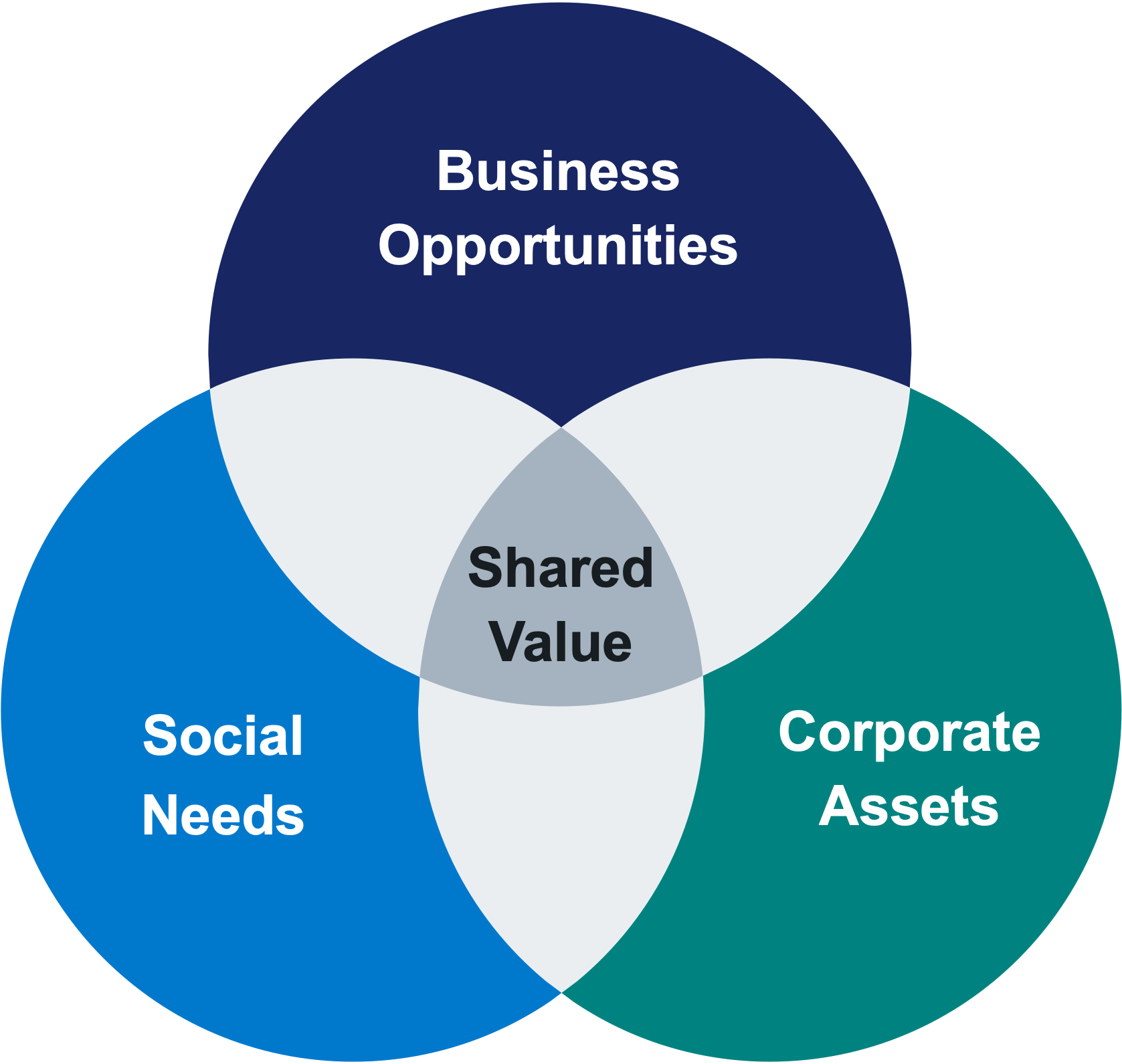
“Strategy and Society: The Link Between Competitive Advantage and Corporate Social Responsibility,” Michael E. Porter and Mark R. Kramer, Harvard Business Review, 2006.
Over the last 20 years, this concept of shared value has influenced how companies shape their strategies to prioritize distinctive benefits for society and their business. The recognition of this interdependence has led to more meaningful engagement with stakeholders—across the business, with partners, in the value chain, and within communities.
Between 2020 and 2025, the percentage of executives surveyed by ENGIE Impact who described sustainability as a top priority for their organization grew from 4% to 14%—and we expect a more significant shift in the years to come. However, as sustainability is quickly becoming a high priority for leading companies, some are struggling to overcome barriers that impede measurable and meaningful progress.
We asked executive leaders who have experienced limited success about the biggest barriers to executing their sustainability programs. The last five years have been particularly challenging, as unforeseen geopolitical, societal, and technological challenges consume time and executive attention. As such, persistent financial underinvestment, lack of organizational capacity, and differing priorities are among the most significant inhibitors to progress. Other reported barriers include slow executive decision-making, lack of skills and resources, and limited financial incentives.
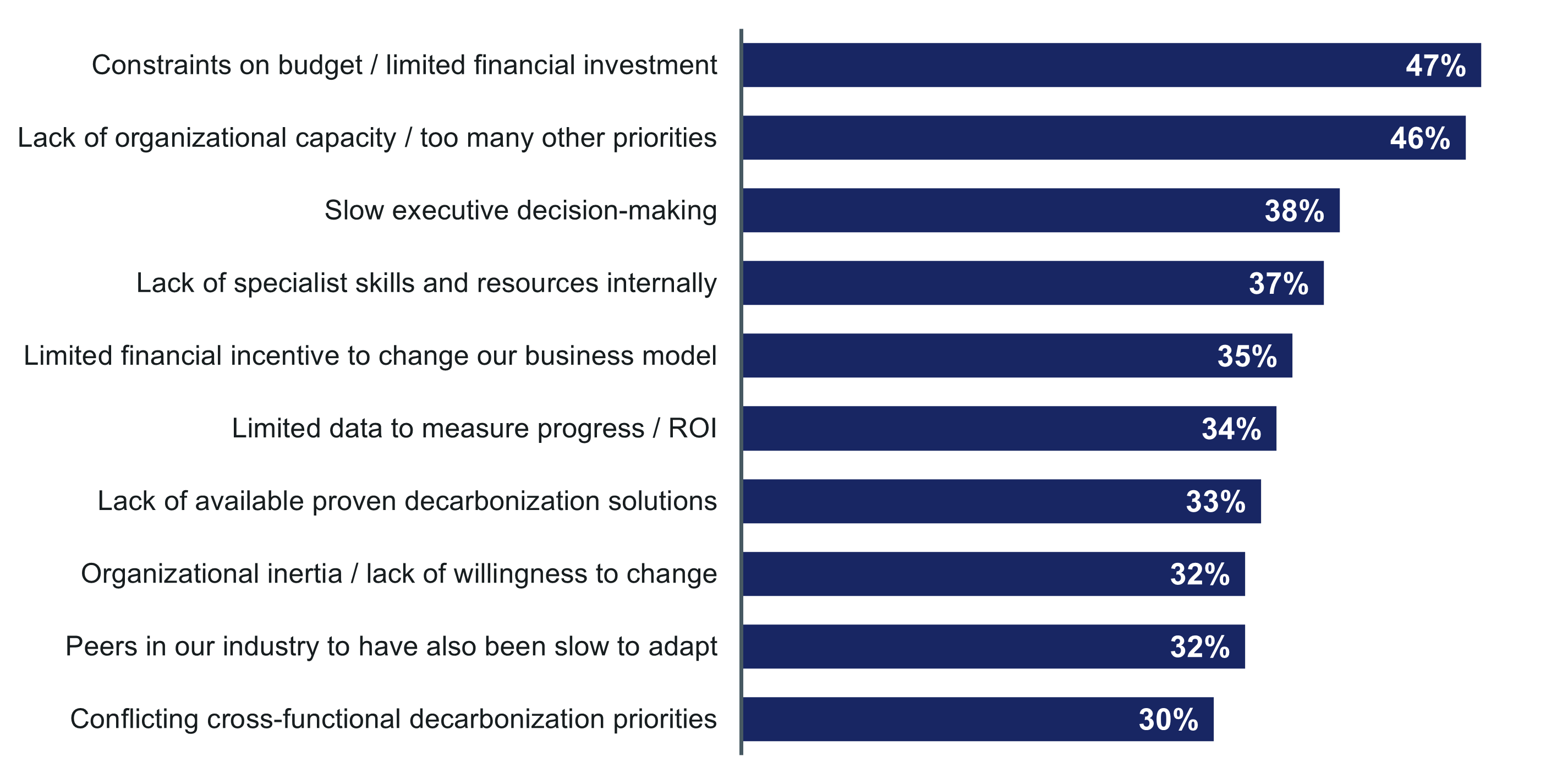
The top 10 biggest barriers from our 2025 survey. Read the report to see the full list.
We asked organizations that consider their sustainability program to be a success about which factors contributed most to that success. The top contributory factor, cited by 44% of respondents, is a sustained focus on sustainability at the board level. Senior leadership, engagement, and championing are vital to building and maintaining sustainable business practices.
Three other important contributory factors emerged from the research: impetus for change, financial investment, and organizational engagement and alignment. Nearly 4 in 10 executives cited industry peer competition as the most important factor that contributes to their success.
Leaders also highlight the importance of whole-organization contribution—senior stakeholder involvement in sustainability is not sufficient. According to 38% of executives, a high degree of engagement from functional teams has contributed most to progress. Collaboration between teams and departments is instrumental in building sustainable business.
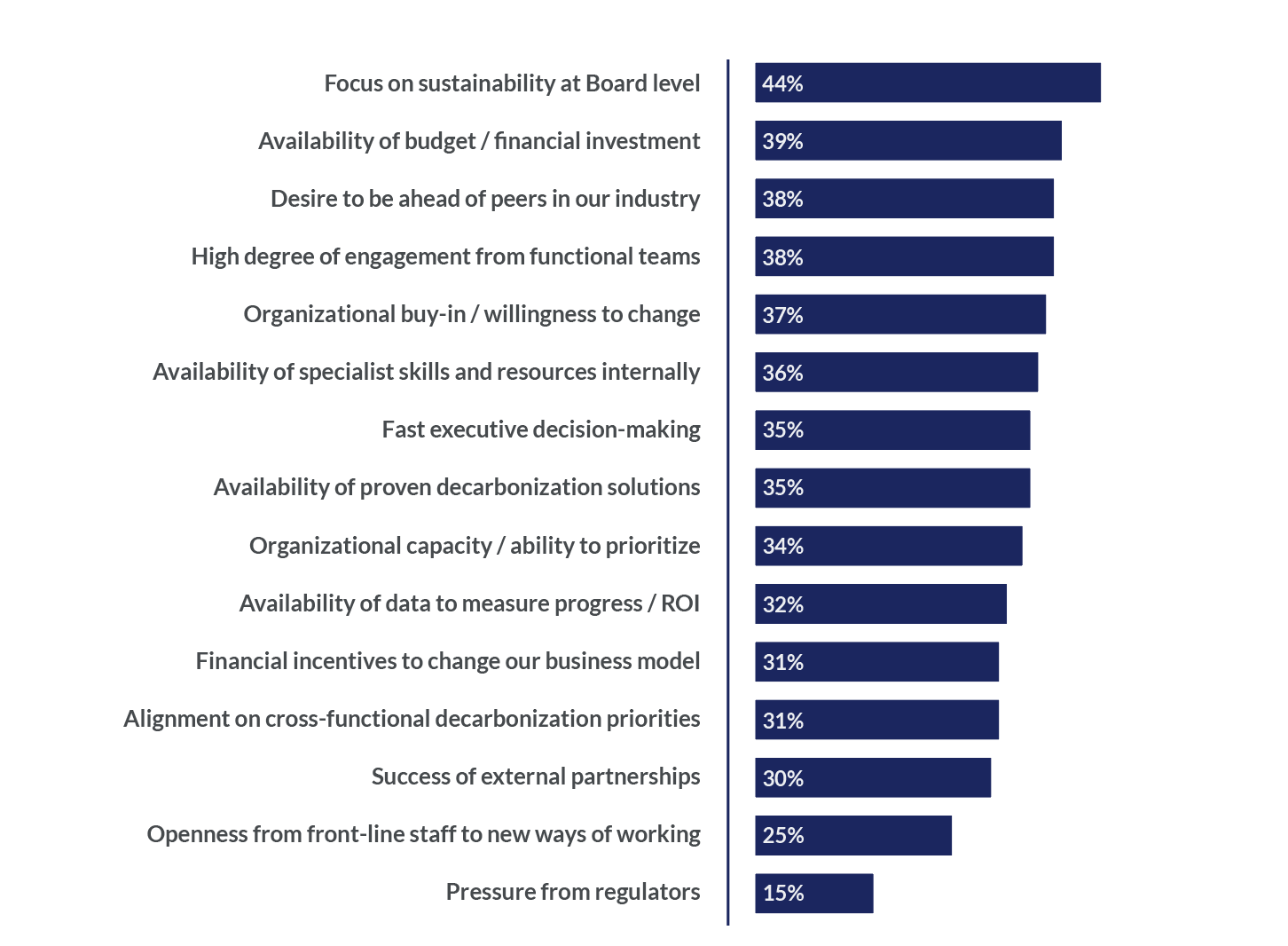
The top 15 success factors from our 2025 survey. Read the report to see the full list.
Integrated governance frameworks improve all levels of the organization by fostering a culture of responsibility, transparency, and accountability, all of which are key ingredients to sustained success. Today, we are dealing with an increasingly fractured global landscape where escalating geopolitical, environmental, societal, and technological challenges threaten sustainability and progress. By integrating ESG considerations into enterprise risk management, organizations can proactively identify and mitigate risks to climate change, social responsibility, and governance practices.
Collaboration and integration ensure that organizations identify ESG risks early, discuss them at the leadership level, and factor them into decision-making, which is crucial to protect budgets and build long-term business resilience. Integration also has the potential benefits of streamlined reporting, demonstrated compliance, building trust with external stakeholders, and unlocking opportunities for innovation. When embedded into governance, ESG compliance is not a checkbox—it ensures that environmental and social considerations are part of every decision.
ESG collaboration and integration present an opportunity for competitive advantage. Take it.
By understanding these five regulatory trends in the ESG disclosure landscape, organizations can shape successful corporate strategies.
Businesses are now understanding, prioritizing, and addressing climate-related risk, focusing on mitigation and adaptation strategies. Enhanced climate disclosures will become a key factor in investment decisions.
Stakeholders—including investors and consumers—are placing greater trust in organizations that demonstrate transparency and accountability.
Companies currently face lawsuits over greenwashing, labor violations, environmental harm, and governance failures. ESG-related litigation is on the rise, and legal teams are taking a proactive role in managing these risks.
ESG reporting demands the collection and verification of vast data sets; inaccurate or inconsistent disclosures can lead to reputational damage and regulatory penalties.
As companies reflect on their risk management practices and performance indicators to facilitate accountability, governance practices are evolving to align with ESG goals.
On December 4, 2025, ENGIE Impact, Lam Research, and Trellis hosted a webinar to explore the practical strategies for establishing unified ESG frameworks and risk management. View the full recording to learn more.
Catherine Osborne, Senior Director of Sustainability Advisory Services at ENGIE Impact, brings 18 years of expertise in advising global businesses on sustainability-related challenges. She currently leads a U.S.-based team of credentialed advisors and analysts specializing in energy, carbon, climate, water, and waste. She focuses on helping organizations develop holistic and integrated approaches to addressing climate-related governance, risk management, and compliance. Catherine is a certified Project Management Professional (PMP®), and she holds a Sustainability and Climate Risk (SCR®) certificate from the Global Association of Risk Professionals (GARP).
Let’s work together to integrate ESG into your strategy and build a more resilient business.