 See All Insights
Building Performance Standards (BPS) are regulations that set specific energy or greenhouse gas (GHG) reduction targets for existing buildings over time. Their purpose is to improve building energy efficiency, reduce carbon emissions, and help meet broader climate goals. BPS regulations ensure that buildings are part of the solution to climate change and are put into place to improve health and comfort, save money, and create jobs, all while ensuring that progress benefits everyone fairly.
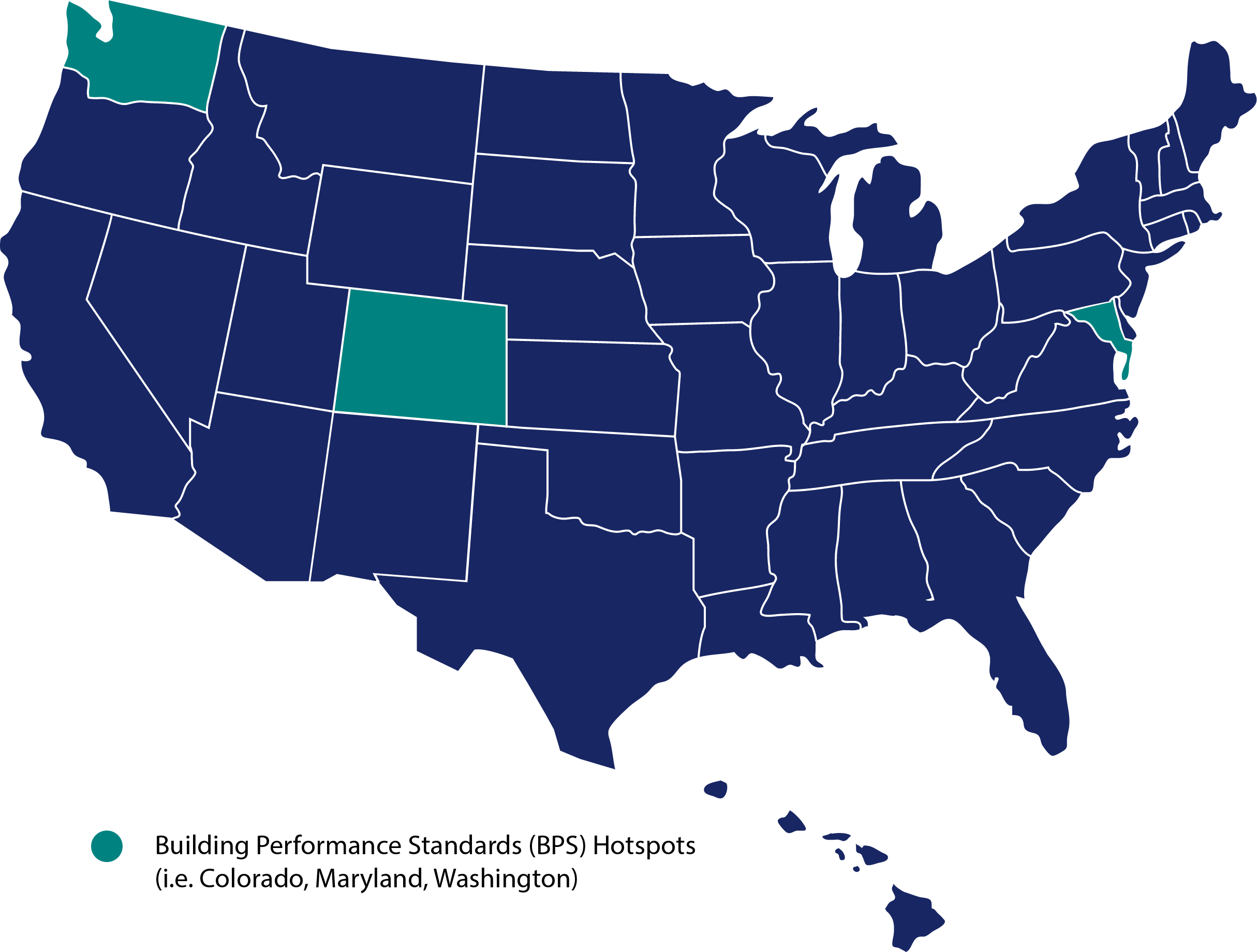
There are currently three jurisdictions of note, making them BPS “hot spots.” Colorado, Maryland, and Washington have all implemented statewide programs that require significant energy or carbon emissions reductions by 2030 and beyond for certain building types and sizes. These progressive markets emphasize performance and other programmatic activities that may require capital investments to implement.
With the impending performance dates on the horizon, organizations will likely be required to take some form of action—and soon. Putting reduction plans into action takes time, so organizations must understand where they need to comply.
Colorado’s Building Performance Colorado (BPC) program is designed to reduce energy use and GHG emissions in large buildings, supporting the state’s goal of net zero emissions by 2050. The BPC program was enacted with phased targets and flexible compliance pathways, emphasizing benchmarking, performance standards, and accountability.
House Bill HB 25-1269 recently addressed changes regarding performance targets, fees, and penalties.
Additionally, the deadline to select a compliance pathway without submitting a formal request has already passed. To request a timeline adjustment, standard target adjustment, or individualized targets, buildings must submit an application that includes an ASHRAE Level 2 Energy Audit by December 31, 2025.
Established under the Climate Solutions Now Act of 2022, Maryland’s Building Energy Performance Standards (BEPS) program aims to achieve net zero direct GHG emissions by 2040. The program mandates annual energy benchmarking and phased performance improvements for large buildings, with flexible compliance pathways and exemptions to accommodate diverse building types and circumstances.
Montgomery County, MD, is committed to achieving net zero GHG emissions by 2035. The Montgomery County BEPS program, enacted in 2022, is a key initiative to support this climate action goal. The program mandates energy benchmarking and phased performance improvements for large buildings, offering flexible compliance pathways and exemptions to ensure inclusivity and feasibility.
Buildings that participate in this program are exempt from the statewide benchmarking and BEPS program requirements and need only to comply with county-specific requirements.
The Clean Buildings Performance Standard (CBPS), established by the Washington State Department of Commerce, aims to reduce GHG emissions and energy use in large buildings. The CBPS is based on ANSI/ASHRAE/IES Standard 100-2018 and mandates phased benchmarking and performance improvements with flexible compliance pathways and exemptions tailored to building types and conditions.
Benchmarking deadlines have already come and gone. Now, the focus has turned toward meeting upcoming performance targets within the next few years—Washington state deadlines are as early as 2026.
Montgomery County: The benchmarking deadline to submit 2024 data has already passed. Benchmarking reports are due annually, and final standards must be met as early as 2033.
Now is the time to determine where in your portfolio you need to comply, map your deadlines, understand your benchmarking requirements, build and update your roadmap, and determine your next steps. Meeting these standards requires years of planning and execution, as well as a variety of stakeholder involvement. This takes time, and even finding exemptions is a very detailed process. Make sure you have the expertise to avoid costly fines and invest in your organization’s energy efficiency.
For more information on energy benchmarking, visit ENERGY STAR® Portfolio Manager®.
Reach out to ENGIE Impact to work with dedicated experts on these next steps.
Craig Walter, Principal Energy Advisor at ENGIE Impact, has 30 years of experience in the energy management industry, using total energy and sustainability management programs to help clients reduce their consumption and cost, from individual sites to large, multi-site commercial portfolios. Craig now guides program development and solutions for ENGIE Impact’s energy management services.
Talk to our experts about optimizing your building energy compliance and BPS roadmap.